
About the firm
Somalia’s full-service business law firm
Founded in 1983 and in continuous full practice since 2000, the firm is the counsel through which international businesses and their lawyers operate in Somalia.
The story
Mogadishu Law Office was founded in 1983, when its founding partner opened a private practice in a city that was then the commercial capital of a functioning state.
The years that followed tested the firm as they tested the country. Through civil conflict and the collapse of central government, its founding partner continued to practise law in Somalia without interruption, holding the institutional memory of how the courts, the Registrar and the ministries actually worked when much of that apparatus had ceased to function. That continuity is the firm’s foundation: it did not arrive after the fact to learn Somali law; it kept the practice alive through the years others left.
With the return of stable institutions from 2000, the firm recommenced full operations and grew alongside the country’s reconstruction. As international corporations, financial institutions, donors and foreign law firms began to look again at Somalia, they needed a counsel who could read the new statutes and knew how the old system had worked underneath them. The firm became that counsel, and in the years since it has grown from a pioneering private practice into one of the foundations of Somalia’s legal landscape.
Its distinctive role is as the bridge between the Somali legal system and the wider market. The firm advises across three jurisdictions, the Federal Republic of Somalia, Somaliland and Puntland, and from eight offices, on the full range of corporate, regulatory and contentious work: registering a business, structuring a transaction, securing a licence, drafting the law itself, or seeing a dispute through to judgment, award or settlement.
Four decades, in milestones
Established in Mogadishu
The firm is founded in Mogadishu, providing commercial and corporate counsel to Somalia’s business community.
Practice without interruption
Through civil conflict and the collapse of central government, the firm keeps practising, holding the institutional memory of how the courts, the Registrar and the ministries actually worked.
Full operations resumed
With the return of stable institutions, the firm recommences full operations and turns to supporting the country’s reconstruction.
A presence across the country
The firm opens offices across the Federal Member States, the Banadir Regional Administration and Somaliland, among the first to offer full-service counsel across Somalia’s regions.
The counsel international firms rely on
International organisations, financial institutions and multinationals begin to instruct the firm, which becomes a trusted route for foreign investment into Somalia.
Specialised practice groups
The firm builds defining depth in telecommunications, energy and infrastructure, the sectors driving Somalia’s economy.
Digital and regulatory leadership
The firm advises on the landmark digital-infrastructure and regulatory mandates of the past decade, from submarine cable landing to satellite licensing.
A public legal record
The firm builds a public legal-resources initiative, including a Somali legislative archive, reinforcing legal transparency in the country.
Four decades of practice
The firm is Somalia’s full-service business law firm, instructed by more than 140 international firms and acting across four continents.
A pluralist legal order
Somali law draws on three sources at once: statute, Shari’ah and customary law. The firm’s practice rests on fluency in all three, so its advice is sound on the page and reliable when an authority or a court applies it.
Statute
The written law: the Provisional Constitution and the modern legislation built on it, including the Companies Act 2019, the Petroleum Law 2020, the National Communications Act 2017 and the Labour Code. The firm advised on much of the subsidiary regulation that gives these statutes effect.
Shari’ah
Paramount under the Constitution, and the governing law for personal status, inheritance and Islamic finance. The firm structures facilities and settles estates so that the Shari’ah position holds before a court and a scholar alike.
Xeer
Somalia’s customary law, still central to how disputes are actually resolved. Reading it correctly is often what makes a settlement durable rather than merely signed.
Local depth, international trust
Local depth, nationwide
Standing relationships across the ministries, the Registrar, the courts and the regulators, from eight offices across the Federal Member States, the Banadir Regional Administration and Somaliland. The firm advises on how an authority will act, not only on how the statute reads.
The Somali desk
More than 140 international and regional law firms instruct the firm as their Somali counsel, many of them repeatedly across years and successive mandates.
Four working languages
Somali, English, Arabic and Italian, so a matter can be handled in the language of the client, the counterparty and the court without anything lost in translation.
Three jurisdictions, one firm
Federal Somalia
The core of the practice, centred on Mogadishu: the federal ministries, the Companies Registrar, the courts and the sector regulators, and the constitutional questions of federal and state authority that run through the firm’s largest matters.
Somaliland
Company registration, regulatory and licensing work, cross-border corporate structuring and major project matters, including telecommunications and port work that spans both jurisdictions at once.
Puntland
Corporate, regulatory and dispute work in the north-east, including constitutional and regulatory analysis for port and corridor concessions and the resolution of federal and state jurisdictional questions.
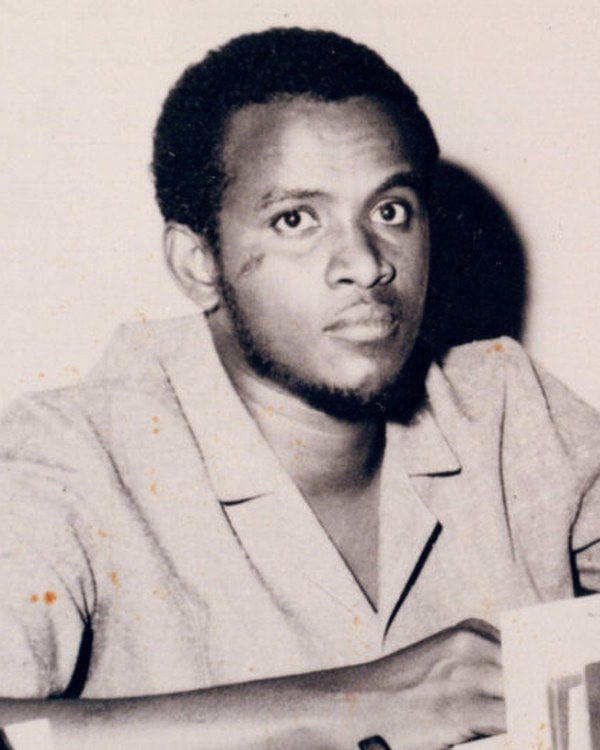
“I have practised law in this country since 1983, through the years it flourished and the years it very nearly disappeared. What we offer clients is that unbroken record: command of Somali law as it is written today, and memory of how it has actually worked for four decades. The world’s leading firms send their most demanding Somali matters here because that combination cannot be improvised. It has to be lived.”